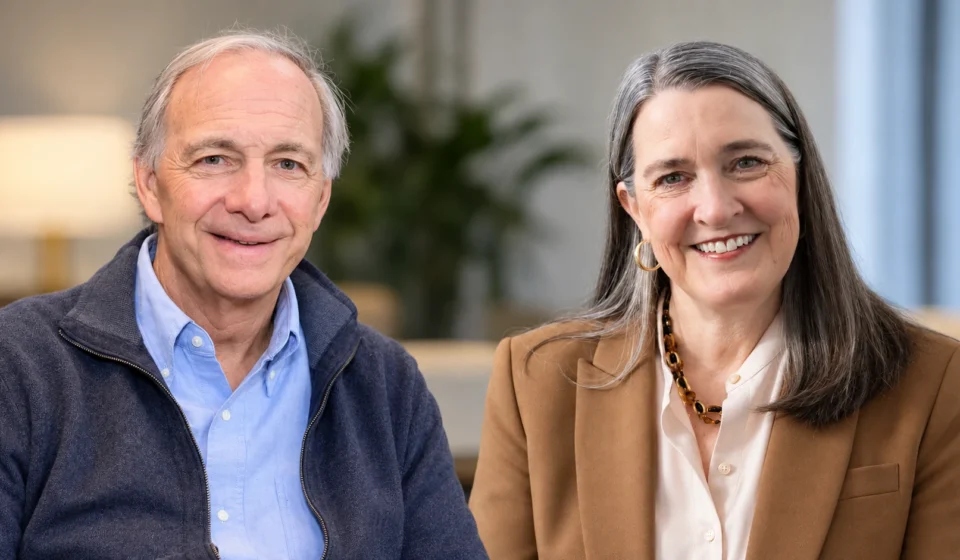

Ray Dalio and Patricia “Patti” Poppe are prominent American business figures, but there is no reliable public evidence establishing that they are relatives, spouses, business partners, colleagues, or collaborators. The clearest documented connection between their professional worlds is indirect: Bridgewater Associates, the investment firm Dalio founded but no longer controls or owns, reported a substantial position in PG&E Corporation while Poppe was serving as the company’s CEO.
In Bridgewater’s June 2026 Form 13F, the investment manager reported 5,931,314 PG&E shares as of June 30, 2026, with a quarter-end reported value of $99,764,701. That filing should not be described as Dalio personally buying or owning those shares. By then, Bridgewater had completed its transition away from Dalio’s control, and his remaining ownership interest had subsequently been repurchased.
Need to know
- No reliable public evidence establishes a direct personal or business relationship between Ray Dalio and Patti Poppe.
- Bridgewater Associates reported 5.93 million PG&E Corporation shares in its Q2 2026 Form 13F.
- That filing belongs to Bridgewater as an institutional investment manager; it does not establish Dalio’s personal ownership of the shares.
- Dalio founded Bridgewater in 1975 but transferred control of the firm in 2022 and later exited his remaining ownership interest.
- Poppe is CEO of PG&E Corporation. As of September 2026, Sumeet Singh—not Poppe—is CEO of the regulated utility subsidiary Pacific Gas and Electric Company.
What connects Ray Dalio and Patricia Poppe?
The most important distinction is between a direct relationship and an institutional overlap.
No authoritative source establishes that Dalio and Poppe have a documented personal, family, or professional partnership. Their careers developed in different industries: Dalio in investment management and economic research, Poppe in manufacturing, energy operations, and utility leadership.
The concrete overlap appears in Bridgewater’s regulatory filings. At March 31, 2026, the firm’s Form 13F reported 24,531 PG&E shares valued at $431,010. At June 30, the reported position had increased to 5,931,314 shares, valued at $99,764,701.
Those two filings establish quarter-end snapshots. They do not show exactly when every share was acquired, which account ultimately owned the securities, or why Bridgewater increased its exposure.
That distinction matters because a Form 13F is not a personal portfolio statement for a firm’s founder. Under SEC guidance on Form 13F, institutional investment managers report securities over which they exercise investment discretion, including securities held in accounts managed for other people or entities.
So the accurate formulation is that Bridgewater reported the PG&E position under its investment discretion. It would be unsupported to say that Dalio personally bought nearly $100 million of PG&E stock or directed the investment.
Ray Dalio built Bridgewater, then handed over control
Dalio founded Bridgewater Associates in 1975 after studying finance at C.W. Post College and earning an MBA from Harvard Business School in 1973.
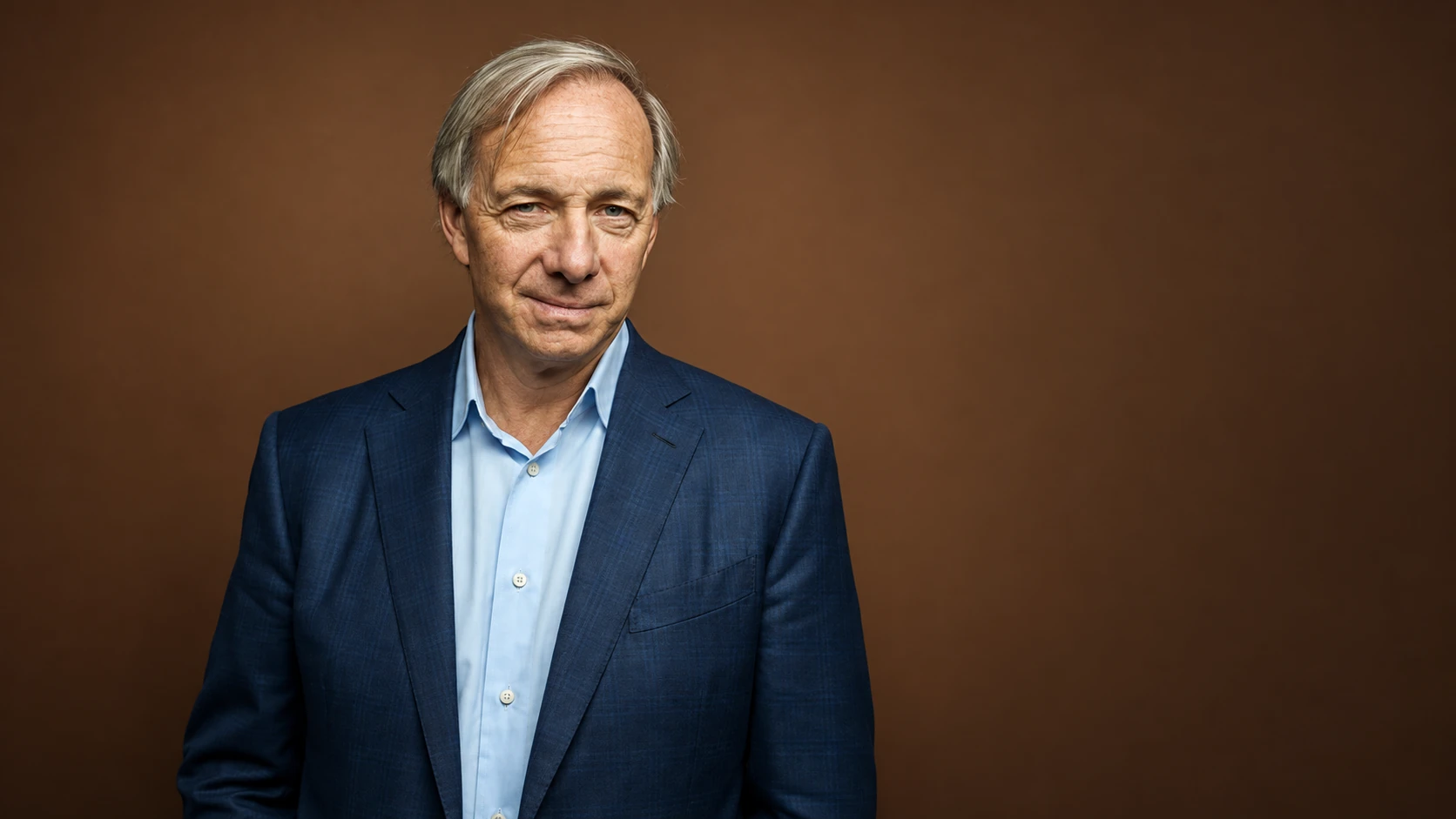
Bridgewater’s own history places the firm’s beginnings in Dalio’s two-bedroom New York apartment. The company later moved to Connecticut and grew from advisory and research work into a major institutional investment manager.
One of the early episodes Dalio has used to explain his relationship with markets dates much further back. Bridgewater says he became interested in investing as a 12-year-old caddie and bought shares in Northeast Airlines because the stock looked inexpensive. The outcome was fortunate, but Dalio later characterized the reasoning behind the decision as weak. That distinction—between a good outcome and a good decision—became relevant to the systematic style he later promoted.
Bridgewater also says its first institutional fund managed directly was a $5 million World Bank account in 1985. The firm subsequently became closely associated with global macro investing, which examines broad forces such as growth, inflation, interest rates, currencies, and economic cycles rather than focusing only on individual companies.
Dalio’s investment work also became associated with the All Weather approach, which Bridgewater says was launched in 1996. The strategy was designed around balancing different sources of portfolio risk so that a portfolio would be less dependent on one economic environment.
His public profile expanded beyond investment management through books including Principles: Life and Work and, more recently, How Countries Go Broke: The Big Cycle, published in June 2025.
Dalio no longer runs or owns Bridgewater
Dalio’s continuing association with Bridgewater can make current investment filings easy to misread.
He stepped down as CEO in 2017, left the chief investment officer role in 2020, and stepped down as chairman at the end of 2021. In 2022, Bridgewater formally completed the transition of control from its founder to its Operating Board.
In its announcement of the completed transition, Bridgewater said Dalio had already transferred day-to-day management and investment oversight to the next generation while remaining a meaningful owner and serving as a mentor.
That ownership position changed later. Reuters reported in July 2025 that Bridgewater had repurchased the remaining shares held by Dalio-related entities.
The chronology is therefore important: Dalio transferred control in 2022, then exited his remaining ownership interest in 2025. By the time Bridgewater reported its much larger PG&E position in the second quarter of 2026, Dalio was the firm’s founder and mentor, not its controlling owner or chief executive.
Bridgewater’s current description of Dalio emphasizes mentoring, research, and the continued development of his economic and investment principles. The firm has also said he is working on a final book titled Investment & Economic Principles.
Patti Poppe took a different route to executive leadership
Patricia K. “Patti” Poppe reached the top of a major utility through engineering and operations rather than finance.
She earned a bachelor’s degree in industrial engineering from Purdue University in 1989 and a master’s degree in the same field in 1991. PG&E also records a master’s degree in management from Stanford Graduate School of Business.
Engineering was not initially her obvious career plan. In a Purdue profile, Poppe recalled that she had once considered television news and changed direction after attending a Women in Engineering career event.
She went on to spend about 15 years at General Motors, where her career included manufacturing and plant-management responsibilities. In later interviews, Poppe said that becoming a plant manager had once been her major professional ambition before a senior leader encouraged her to consider a broader executive path.
That operational background became the through-line of her later energy career. She moved from GM to DTE Energy, where her work included power-plant leadership, and later joined Consumers Energy and CMS Energy.
By 2016, she had become president and CEO of both CMS Energy and Consumers Energy.
Her move to PG&E came at a far more difficult moment.
Taking over PG&E after bankruptcy
PG&E emerged from Chapter 11 bankruptcy on July 1, 2020. Poppe became CEO of PG&E Corporation in January 2021, roughly six months later.

In a 2024 Fortune interview, Poppe described the job as more than a balance-sheet turnaround. She said she had been interested in an operational, safety, and cultural transformation rather than simply a financial recovery.
That distinction reflected the environment she entered. California regulators were continuing to scrutinize PG&E’s wildfire risk and operational practices. In April 2021, the California Public Utilities Commission placed the company into the first step of an enhanced oversight process after identifying shortcomings in how it had prioritized vegetation management on high-risk power lines during 2020.
Poppe’s tenure has therefore been defined by the intersection of safety, infrastructure, regulation, customer costs, and the need to rebuild institutional trust.
One of the most visible initiatives came in July 2021, when PG&E announced a plan to place approximately 10,000 miles of power lines underground in high-fire-threat areas over a multi-year period.
That 10,000-mile figure was an ambition, not a single regulator-approved construction commitment. In PG&E’s 2023 General Rate Case, the California Public Utilities Commission authorized 1,230 miles of undergrounding along with 778 miles of covered conductor for the relevant program period.
Keeping those numbers separate is important: the first describes the company’s broader long-term initiative, while the second reflects a specific regulatory authorization.
Poppe’s management approach
Poppe has described her operating philosophy in terms that are unusually personal for a utility executive.
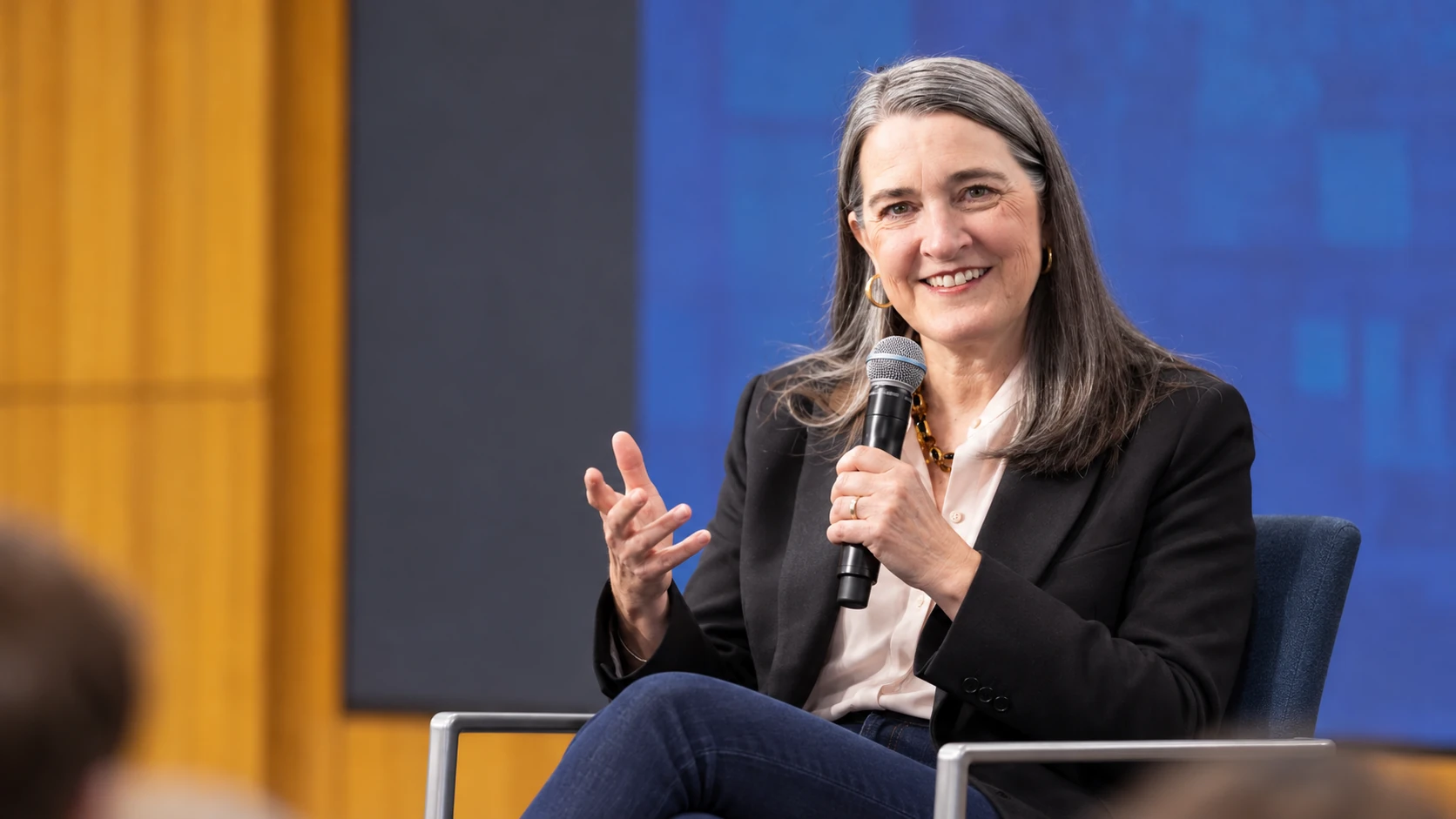
In interviews with UC Berkeley’s Haas School of Business and Fortune, she has repeatedly used the phrase “leading with love.” In practice, she connects that idea to safety, employee responsibility, and making problems visible rather than concealing them.
She has also emphasized lean-management methods shaped by her manufacturing experience. Lean operating systems focus on making work processes visible, identifying obstacles, standardizing improvements, and involving employees directly in solving operational problems.
That approach links her early plant-management ambitions with her later executive work. Rather than presenting her career simply as a progression through corporate titles, the better through-line is operational problem-solving: first in auto manufacturing, then power generation, and finally a large utility working under intense safety and regulatory pressure.
Poppe has also described the decision to leave General Motors for DTE Energy as an important career turning point. In a 2024 Haas conversation, she explained that she and her husband had been preparing for a possible move to Korea with GM when an opportunity emerged at DTE. Staying in Michigan changed the direction of her career and ultimately moved her from automotive manufacturing into the energy sector.
What Patti Poppe does now
As of September 20, 2026, Poppe remains CEO of PG&E Corporation and a director of PG&E Corporation and Pacific Gas and Electric Company, according to PG&E’s current executive biography.
Her exact title deserves attention because the corporate structure changed in 2026. Sumeet Singh became CEO of Pacific Gas and Electric Company, the regulated utility subsidiary, on January 1, while Poppe continued leading the parent corporation.
That makes the shorthand “PG&E CEO” potentially confusing. Poppe leads PG&E Corporation; Singh leads the operating utility.
Her current work also extends beyond the earlier post-bankruptcy turnaround. On September 2, 2026, PG&E announced a strategic review of its organization and financing and said it planned to defer approximately $2 billion of work scheduled for 2027 while maintaining spending the company considered necessary for safety and compliance.
Because that review was still current in September 2026, it should be treated as an ongoing process rather than a completed restructuring.
Why the two names should not be turned into a partnership story
Dalio and Poppe do have an interesting professional contrast.
Dalio built an investment organization around systematic research, economic cycles, explicit decision rules, and a culture that Bridgewater has described in terms of open disagreement and transparency.
Poppe built her career through factories, power plants, utility operations, and regulatory accountability, later describing her own approach through lean management and “leading with love.”
Those differences can be discussed, but they should not be converted into evidence of mutual influence.
There is no reliable public record showing that Dalio taught Poppe, advised PG&E, collaborated with her, or personally selected Bridgewater’s PG&E position. Likewise, no source establishes that Poppe has adopted Dalio’s principles or publicly identified him as an influence.
Their names intersect most clearly through institutions: Bridgewater reported a PG&E investment position while Poppe was running PG&E Corporation.
That is narrower than a business partnership, but it is also more concrete and useful than a speculative leadership comparison.
Frequently asked questions
Are Ray Dalio and Patricia Poppe related?
No reliable public source establishes a family relationship between them.
Are Ray Dalio and Patti Poppe business partners?
No documented business partnership has been established. Their strongest verified professional overlap is indirect: Bridgewater Associates reported a significant PG&E Corporation stock position in 2026 while Poppe was PG&E Corporation’s CEO.
Did Ray Dalio personally buy PG&E stock?
Bridgewater’s Form 13F does not establish that. The filing reports securities under Bridgewater’s investment discretion, which can include managed accounts. It should not be treated as Dalio’s personal portfolio.
Does Ray Dalio still run Bridgewater?
No. He stepped down from day-to-day leadership over several years, and Bridgewater completed its transfer of control in 2022. Reuters reported in 2025 that the firm later repurchased the remaining ownership shares held by Dalio-related entities.
Is Patti Poppe still CEO of PG&E?
Yes, with an important qualification. As of September 2026, she is CEO of PG&E Corporation, the parent company. Sumeet Singh is CEO of Pacific Gas and Electric Company, its regulated utility subsidiary.
Conclusion
Ray Dalio and Patricia Poppe are best understood as separate public figures whose careers intersect indirectly rather than as partners or collaborators. Dalio built Bridgewater into a major investment institution before handing over control and ownership; Poppe moved from engineering and plant operations into utility leadership at PG&E Corporation during a period shaped by wildfire risk, regulation, infrastructure investment, and affordability pressures.
The most concrete link between their professional worlds is Bridgewater’s 2026 PG&E disclosure. Even there, precision matters: it is an institutional investment-manager filing, not evidence that Dalio personally bought PG&E shares or that he and Poppe share a business relationship. That distinction gives the paired names a factual explanation without inventing a connection the public record does not support.