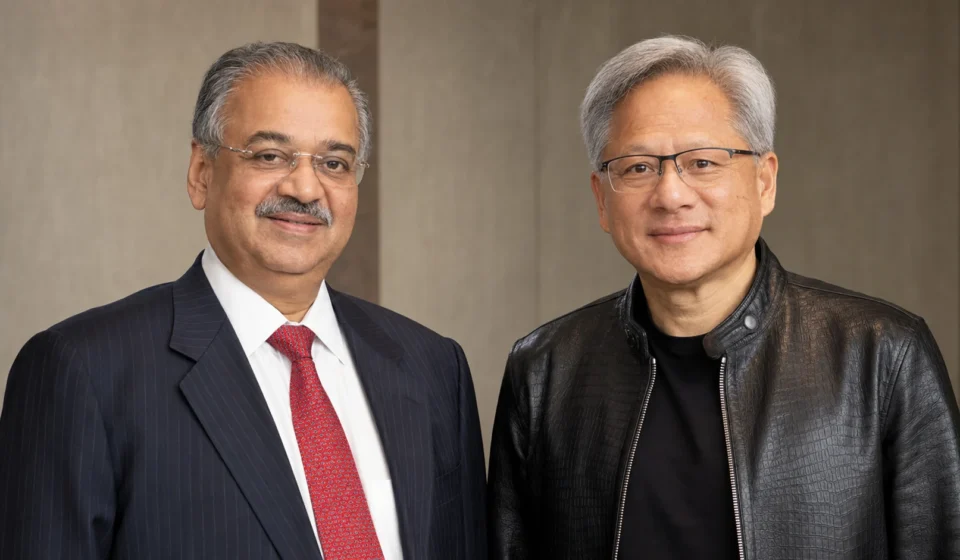

Dilip Shanghvi and Jensen Huang are two long-serving founders whose companies became global leaders in very different industries. Shanghvi founded Sun Pharmaceutical Industries and, as of September 3, 2026, serves as its Executive Chairman. Huang co-founded NVIDIA in 1993 and remains its president and CEO. Despite their names appearing together in searches and comparison pages, no documented direct personal relationship, business partnership, board connection, or collaboration between them was established in the public record reviewed for this profile.
What makes the comparison useful is not a supposed connection between the two men but the contrast in how they built their companies. Shanghvi expanded Sun Pharma from a small psychiatry-focused drug business through product development and acquisitions, then increasingly toward innovative medicines. Huang helped build NVIDIA from a 3D graphics company into a computing platform central to accelerated computing and artificial intelligence.
Need to know
- Dilip Shanghvi is the founder and current Executive Chairman of Sun Pharma; he ceased serving as Managing Director when Kirti Ganorkar took that role on September 1, 2025.
- Jensen Huang co-founded NVIDIA with Chris Malachowsky and Curtis Priem on April 5, 1993, and has remained its president and CEO since the company’s founding.
- No documented direct relationship or collaboration between Shanghvi and Huang was found. That does not establish that they have never met.
- Shanghvi’s documented management approach emphasizes strategic fit, acquisitions, integration and balancing different time horizons in pharmaceutical research.
- Huang’s career has been built around graphics, accelerated computing, CUDA and the expansion of NVIDIA’s technology into artificial intelligence.
Are Dilip Shanghvi and Jensen Huang connected?
There is no reliable basis for describing Dilip Shanghvi and Jensen Huang as business partners, collaborators, relatives or members of the same corporate network. The strongest available records instead place them in separate industries and organizations: Shanghvi at Sun Pharmaceutical Industries and Huang at NVIDIA.
The careful formulation matters. An absence of documented collaboration does not prove that the two men have never met or attended the same event. It means only that no authoritative evidence reviewed for this profile established a significant direct relationship between them.
Their strongest connection is therefore comparative. Both have spent decades associated with companies they helped create, both retain senior strategic roles in 2026, and both have overseen businesses that evolved substantially beyond their original markets.
How Dilip Shanghvi built Sun Pharma
Sun Pharma’s history begins on a much smaller scale than its present global operations. According to Sun Pharma’s corporate milestones, the company was established in 1983 with five products aimed at psychiatry and a two-person marketing team.
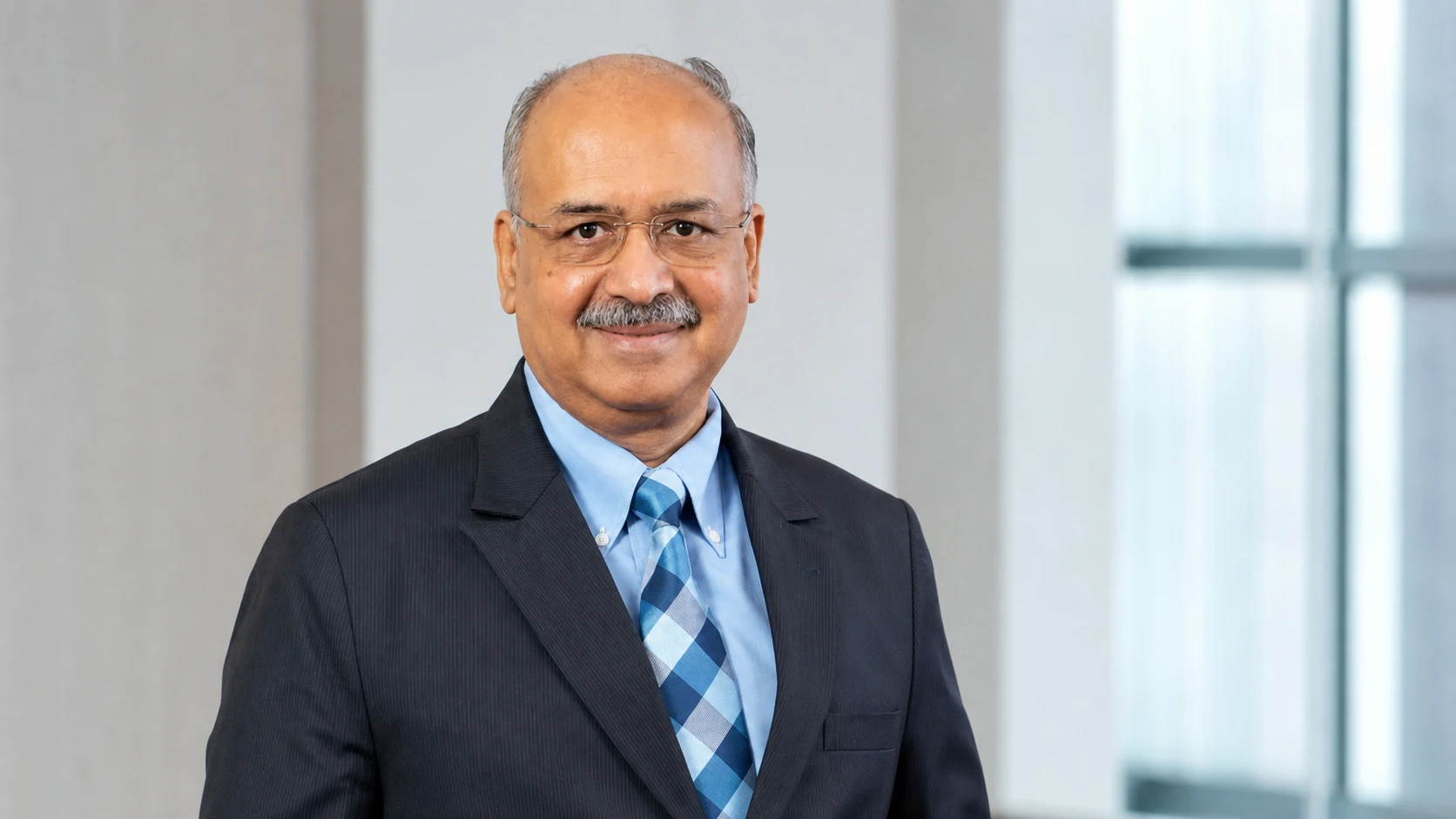
Shanghvi’s educational background was in commerce rather than medicine. A Sun Pharma annual-report profile identifies him as a commerce graduate of the University of Calcutta. His public career became defined not by laboratory research of his own but by decisions about products, businesses, investment and corporate expansion.
Over subsequent decades, Sun moved far beyond its initial product range. It built research operations, entered public markets and expanded internationally. Acquisitions became an important part of that growth.
One of the most consequential was Ranbaxy Laboratories. The transaction was announced in 2014, while Sun Pharma’s merger archive records March 25, 2015 as the date the acquisition was completed. Keeping those dates separate avoids a common chronology error in profiles that treat the announcement and completion as the same event.
The Ranbaxy transaction also provides a less polished view of corporate expansion than a simple list of deals would suggest. In a 2025 Forbes India interview, Shanghvi described the acquisition as having greatly increased organizational complexity and senior-management demands. He also discussed acquisition decisions more broadly in terms of strategic fit, whether Sun could improve the acquired business, cultural integration and the amount of management attention a deal would consume.
That framework helps explain an important feature of Shanghvi’s career: acquisitions appear in the record not simply as exercises in getting larger, but as capital-allocation decisions that have to compete with internal investment and research.
Shanghvi has similarly described research and development as a portfolio problem. In the same 2025 interview, he said Sun seeks a balance among short-, medium- and long-term projects rather than expecting every investment to produce a quick result.
A changing role at Sun Pharma
Shanghvi’s title changed materially in 2025. Older biographies may still describe him as Chairman and Managing Director, but that is no longer current.
In a June 2025 succession announcement, Sun Pharma said Kirti Ganorkar would become Managing Director effective September 1, 2025. Shanghvi remained Executive Chairman, with a continuing focus on the company’s specialty portfolio and long-term strategic direction.
Sun Pharma’s current board profile identifies him as founder and Executive Chairman.
The transition is significant because it separates daily executive management from Shanghvi’s continuing strategic influence. He did not leave the company he founded; his role became more concentrated on longer-range priorities.
One of those priorities is the expansion of Sun’s innovative-medicines business. For the financial year ended March 31, 2026, Sun reported sales of ₹582.201 billion and global Innovative Medicines sales of US$1.420 billion. Those are company operating figures, not Shanghvi’s personal income or wealth.
The company’s biggest current strategic move is its proposed acquisition of Organon. Under the definitive agreement announced in April 2026, Sun agreed to pay US$14 per share in cash, with the transaction described at an enterprise value of US$11.75 billion.
As of July 31, 2026, Sun said Organon stockholders had approved the transaction and that the companies continued to target an early-2027 closing. The deal therefore remained pending rather than completed as of the September 3, 2026 status date used here.
Jensen Huang’s route from engineering to NVIDIA
Jensen Huang’s career developed through electrical engineering and semiconductor companies before NVIDIA.
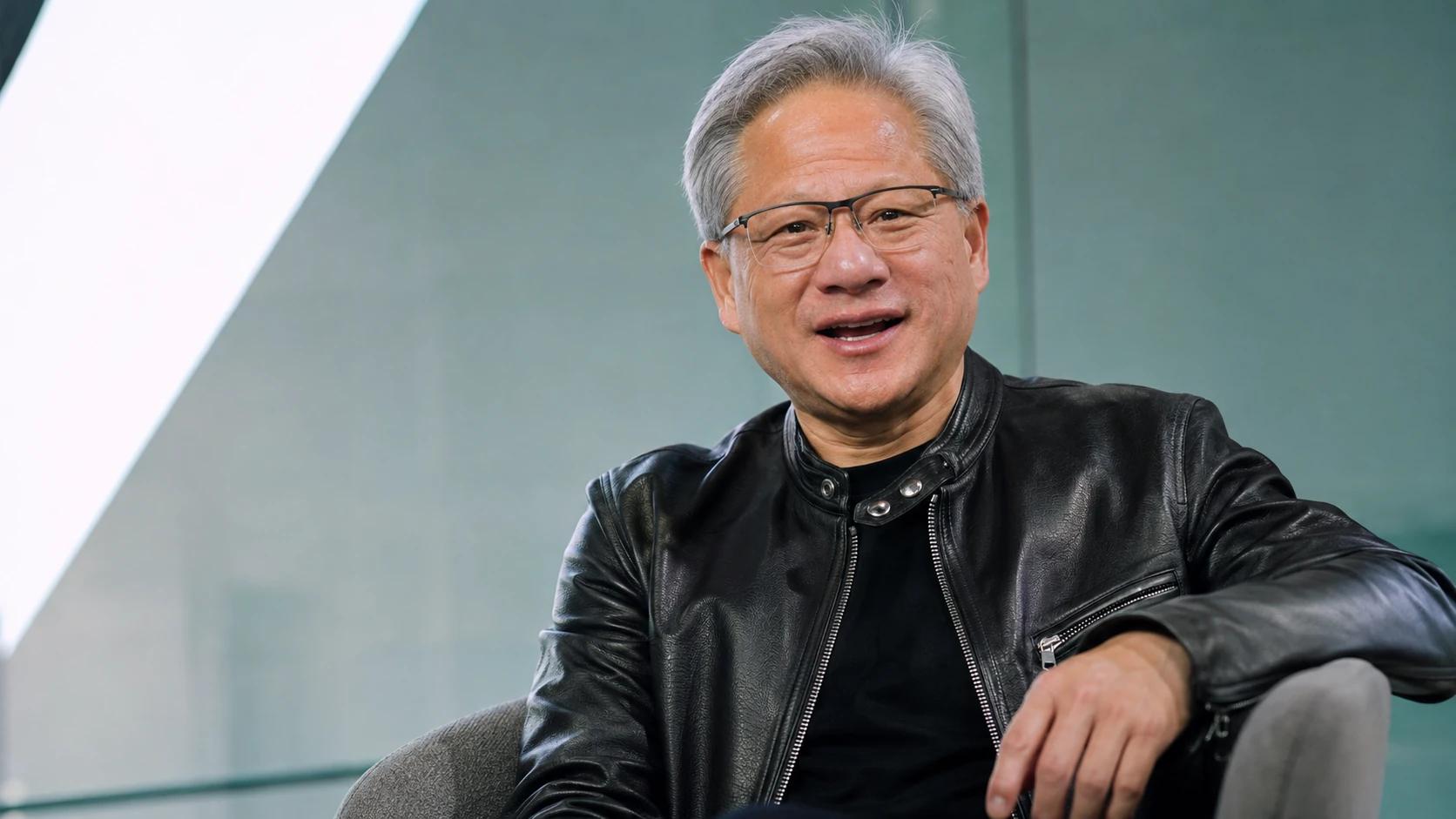
He earned a bachelor’s degree in electrical engineering from Oregon State University in 1984 and later a master’s degree in electrical engineering from Stanford University, which Stanford dates to 1992. Before NVIDIA, Huang worked at AMD and LSI Logic.
NVIDIA was founded on April 5, 1993 by Huang, Chris Malachowsky and Curtis Priem, according to NVIDIA’s corporate timeline. Huang has served as president and CEO since the company’s inception.
The company’s original focus was 3D graphics. In a 2024 Stanford Graduate School of Business discussion, Huang recalled the early choice to pursue a market that combined difficult technical problems with an immature videogame industry. He framed that decision as an example of thinking from first principles rather than simply extending established assumptions.
That approach became more consequential as NVIDIA’s technology moved beyond graphics.
NVIDIA’s own chronology highlights three developments in particular: its 1999 GPU milestone, the introduction of CUDA in 2006 and the use of its computing technology in the AlexNet deep-learning breakthrough in 2012. NVIDIA sometimes describes itself as having invented the GPU, but that historical-priority claim is best treated as the company’s own framing. The more defensible point is that graphics processors and CUDA became central to NVIDIA’s transition from graphics hardware toward a broader accelerated-computing platform.
CUDA was especially important because it allowed developers to use NVIDIA GPUs for types of parallel computation beyond rendering graphics. That widened the potential market for the company’s hardware and software well before the current generative-AI boom.
How AI changed NVIDIA’s scale
By 2026, NVIDIA’s business bore little resemblance to the narrower graphics company of its early years.
For the quarter ended July 26, 2026, NVIDIA reported revenue of US$96.221 billion, with US$89.023 billion coming from its Data Center business, according to the company’s SEC-filed quarterly report. Those figures illustrate how extensively demand for accelerated computing and AI infrastructure had reshaped NVIDIA’s business.
They should not, however, be treated as Huang’s personal earnings. Company revenue, executive compensation, share ownership and personal wealth are separate financial concepts.
NVIDIA’s 2026 proxy statement listed Huang—under the name Jen-Hsun Huang—as beneficially owning 870,604,104 NVIDIA shares, or 3.58%, as of March 23, 2026. Beneficial ownership is a regulatory disclosure and should not be converted automatically into an exact personal net-worth figure because market prices move and ownership structures, taxes, liabilities and other assets matter.
Huang’s public standing also expanded beyond NVIDIA in 2026. IEEE named him the recipient of its 2026 Medal of Honor, and in March the White House announced his appointment to the U.S. President’s Council of Advisors on Science and Technology.
NVIDIA’s latest acquisition move
NVIDIA’s newest major transaction adds another dimension to Huang’s current role.

On September 3, 2026, NVIDIA disclosed in an SEC Form 8-K that it had entered a definitive agreement the previous day to acquire Hugging Face.
The filing described approximately US$11.9 billion in purchase consideration for Hugging Face shareholders, plus an employee equity-retention program valued at up to roughly US$1 billion. NVIDIA said it expected the transaction to close in the first half of 2027, subject to regulatory approvals and other customary conditions.
As with Sun Pharma’s Organon transaction, the distinction between signing and closing matters. NVIDIA had agreed to acquire Hugging Face; it had not yet completed the transaction as of September 3, 2026.
Two very different founder playbooks
The most interesting comparison between Shanghvi and Huang is not personal wealth or celebrity. It is how each approached the problem of building a company over decades.
Shanghvi’s documented method is closely tied to portfolio construction. Sun Pharma grew through its own products and research, but acquisitions were repeatedly used to expand its geographic reach, capabilities and product base. His 2025 comments suggest that he evaluates those transactions through strategic fit, integration risk and management capacity rather than size alone.
Huang’s record is more closely associated with committing to a computing architecture and then extending its usefulness. NVIDIA began in graphics, but technologies such as CUDA allowed its processors to serve a far broader range of computational work. As artificial intelligence demanded large amounts of parallel processing, that earlier platform work became increasingly important.
Their sectors also impose different constraints. Pharmaceutical growth depends on research timelines, clinical development, regulation, manufacturing and intellectual property. Semiconductor and computing-platform businesses operate through chip design, software ecosystems, developer adoption, manufacturing partnerships and rapid product cycles.
The comparison therefore works best when it respects those differences. Sun Pharma’s acquisition record and NVIDIA’s technology-platform expansion are not versions of the same strategy; they are examples of founders making long-horizon decisions within very different industrial systems.
What they are doing now
As of September 3, 2026, both men remain closely tied to the strategic direction of the companies they helped create.
Shanghvi is no longer Sun Pharma’s Managing Director, but as Executive Chairman he remains involved in long-term strategy and the specialty portfolio. The proposed Organon acquisition, if completed, would represent a major expansion of Sun’s global business and innovative-medicines ambitions.
Huang continues to hold both the president and CEO titles at NVIDIA. The company’s latest reported financial results show extraordinary Data Center scale, while the pending Hugging Face transaction points toward deeper involvement in the software, models and developer infrastructure surrounding artificial intelligence.
The two companies’ pending acquisitions should not be compared simply by placing their headline dollar figures side by side. Sun’s US$11.75 billion Organon figure was stated as enterprise value, while NVIDIA’s Hugging Face filing separately described shareholder consideration and an employee retention program. They are different transaction measures.
What about their net worth?
A precise Dilip Shanghvi-versus-Jensen Huang net-worth comparison is not included here because personal-fortune figures are third-party estimates that can change rapidly and depend on methodology and market prices.
NVIDIA’s regulatory filing provides a dated disclosure of Huang’s beneficial share ownership, but beneficial ownership is not the same thing as net worth. Likewise, Sun Pharma’s revenue, valuation or acquisition spending cannot be treated as Shanghvi’s personal fortune.
Any current comparison should therefore use directly verified estimates from a consistent provider and nearly the same date rather than combining unrelated headlines.
Conclusion
Dilip Shanghvi and Jensen Huang do not need a documented personal connection to make for a useful comparison. Shanghvi’s career shows the evolution of Sun Pharma from a small, focused pharmaceutical business into a global company shaped by acquisitions, research investment and an increasing emphasis on innovative medicines. Huang’s career tracks NVIDIA’s expansion from 3D graphics into accelerated computing and the infrastructure underlying modern AI.
Their current positions also show different versions of founder continuity. Shanghvi has transferred day-to-day Managing Director responsibilities while retaining strategic authority as Executive Chairman. Huang still occupies NVIDIA’s top executive role more than three decades after co-founding the company. In both cases, the more revealing story lies in the long sequence of documented strategic choices—not in an unsupported suggestion that the two men are personally connected.