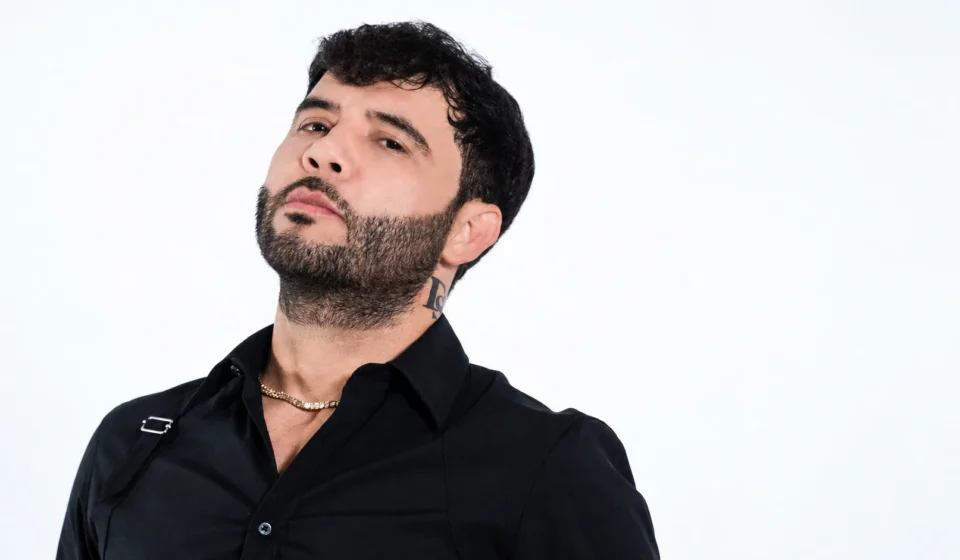

José Darey Castro’s exact age is not reliably verified in authoritative public sources as of September 20, 2026. Several biography websites publish conflicting birth dates, but stronger sources documenting his identity, music career, trademark history and recent releases do not provide a confirmed birth year.
Castro is the singer and accordionist most closely associated with Dareyes de la Sierra, the regional Mexican act linked to Navojoa, Sonora. A 2025 Los Angeles Times profile described him as an L.A.-based singer and accordionist whose career had already lasted more than two decades.
That career is far easier to document than his birth details. It includes years of regional Mexican recordings, a deadly 2004 attack he survived, major radio success, a Latin Grammy nomination for the group, and a renewed wave of attention through Redención in 2025 and SABIA in 2026.
Need to know
- José Darey Castro’s exact age and birth year are not publicly confirmed by a reliable primary or authoritative source.
- He is best known as the singer and accordionist behind Dareyes de la Sierra.
- The fuller name José Darey Castro Borbón appears in U.S. trademark records for LOS DAREYES DE LA SIERRA.
- His documented career includes “Hasta El Día De Hoy,” a 2009 Latin Grammy nomination for Una Copa Más, and the 2025 album Redención.
- As of September 20, 2026, he remained active as a recording and performing artist.
José Darey Castro profile summary
| Detail | Verified information |
|---|---|
| Public name | José Darey Castro |
| Fuller recorded name | José Darey Castro Borbón, as listed in U.S. trademark records |
| Profession | Singer, accordionist, composer and producer |
| Known for | Dareyes de la Sierra / Los Dareyes de la Sierra |
| Musical field | Regional Mexican music, including norteño and corridos |
| Major recent albums | Redención (2025), SABIA (2026) |
| Current status | Active as of September 20, 2026 |
Why his age remains uncertain
The problem is not that the internet lacks a date for Castro. It is that the dates disagree and the sites publishing them do not show convincing original documentation.
One biography page gives April 22, 1980. Another gives January 1, 1980. A different source claims April 16, 1987. Famous Birthdays lists April 16 but does not provide a birth year. Those claims cannot all be correct, and none is supported in the reviewed material by a civil record, an authorized biography or a clear statement from Castro himself.
That makes estimates based on career history equally unreliable. A reported band-formation year can help establish how long someone has worked in music, but it cannot prove how old that person was at the time.
The most defensible answer is therefore straightforward: José Darey Castro’s exact age is not currently established by reliable public evidence.
Identity and the Dareyes de la Sierra name
Castro’s public identity is much better documented than his birth date.
U.S. trademark records for LOS DAREYES DE LA SIERRA list José Darey Castro Borbón as the individual owner or registrant. The trademark record gives February 14, 2005 as the mark’s first-use date and records the literal English translation as “The Dareyes of the mountain range.”
That fuller name is best described as the name appearing in the trademark record rather than as a confirmed birth-certificate name.
The geographic picture also requires care. Reputable reporting consistently associates Dareyes de la Sierra with Navojoa, Sonora, but weaker biography sites disagree over Castro’s precise birthplace. It is therefore safer to identify Navojoa as the act’s origin or musical base rather than state that Castro himself was born there.
Early musical development
One of the clearest personal details in Castro’s biography comes directly from his 2025 interview with the Los Angeles Times.
He said his father gave him his first guitar when he was 10. Castro later broke the instrument, then returned to playing five years afterward and continued with music. The detail offers a rare documented glimpse of his early relationship with an instrument without requiring speculation about his schooling, upbringing or private family life.
The Chicago Sun-Times has reported that Los Dareyes de la Sierra was founded in Navojoa in 1997. That date is useful as part of the band’s history, while the 2005 trademark first-use date supplies a separate documentary marker for the Dareyes name.
Castro’s long career also predates the current corridos tumbados boom. By the time younger audiences encountered him through recent collaborations, he had already spent years working in norteño, corridos and related regional Mexican styles.
The 2004 attack and the career that followed
A major turning point came in 2004, when musicians associated with Los Alteños de la Sierra were attacked in Chihuahua. Later reporting specifically identified Castro as a survivor.
Contemporary accounts conflict over the precise number of people killed, so assigning a definitive death toll would overstate what can be established. What is securely documented is that the attack was deadly and that Castro survived it.
The event did not end his career. By the middle and later years of the decade, Dareyes de la Sierra was building a stronger chart presence. Billboard-origin reporting later documented “El Jabali” on Regional Mexican Airplay, while “Hasta El Día De Hoy” became one of the act’s defining recordings.
That song spent 11 weeks at No. 1 on Regional Mexican Airplay in 2008 and also reached No. 3 on Hot Latin Songs. The songwriting credit deserves precision: BMI records identify Gabriel Flores as the writer associated with “Hasta El Día De Hoy,” so Castro should not be described as the songwriter of every major Dareyes hit simply because he later accumulated composition credits of his own.
Recognition and a wider audience
The group’s profile continued to grow at the end of the 2000s. Una Copa Más was nominated for Best Banda Album at the 2009 Latin Grammy Awards. That was a nomination rather than a win, but it placed Dareyes de la Sierra within one of Latin music’s major industry institutions.
Years later, Castro’s catalog began finding new listeners through collaborations and changing trends in música mexicana. His public role also evolved. Recent release credits do not present him only as a frontman; they identify him as a composer and producer on newer material.
That distinction matters because it shows a career that expanded beyond singing and accordion without rewriting the authorship of older songs.
The Redención comeback
The most visible recent chapter of Castro’s career arrived with Redención in May 2025.
The album contained 14 tracks and featured collaborations with younger artists including Peso Pluma, Tito Double P, Neton Vega and Gabito Ballesteros. According to the Los Angeles Times, it debuted at No. 3 on Spotify’s Top Albums Debut Global chart. A deluxe edition followed in June.
The project also preceded what was billed as Castro’s first U.S. tour, a 20-date run beginning in Los Angeles in August 2025.
Castro described the musical shift as gradual rather than abrupt. Speaking to the Times about his newer sound, he said the evolution “wasn’t a change that happened overnight.” He also described the music itself as something that “comes organically from me.”
Those comments are useful because they frame Redención as part of a longer creative progression rather than a sudden attempt to attach an older act to a younger trend.
The album’s guest list nevertheless helped connect Castro with the current corridos audience. That cross-generational position became one of the clearest features of his public profile in the mid-2020s: an established regional Mexican performer working alongside some of the genre’s newer commercial names.
SABIA and his 2026 work
Castro remained active after the Redención cycle.
His next studio album, SABIA, was released on April 16, 2026 through Double P Records. The Apple Music album page lists 21 tracks, while distributor metadata credits Castro repeatedly as a composer and producer.
Those credits help define his present role more clearly. He remains the recognizable voice and accordion player associated with Dareyes de la Sierra, but his involvement also extends into the writing and production side of current recordings.
Later in 2026, Los Dareyes de la Sierra appeared on “Velas y Champagne,” released August 28 as part of Jorge Morales El Jilguero’s FKNN Corazon, with Castro receiving a producer credit.
As of September 20, 2026, his public activity therefore included both recent studio work and scheduled live appearances. Future concert listings should always be treated as planned events until they actually take place, but the broader picture is clear: Castro remained professionally active.
What the public record does and does not establish
Castro’s biography has become a useful example of why repeated online claims should not automatically be treated as confirmed facts.
The public record securely establishes his identity as a singer and accordionist, his association with Dareyes de la Sierra, the trademark name José Darey Castro Borbón, major career milestones, the 2004 attack he survived, his recent albums and his newer production credits.
It does not securely establish his exact birth year, complete date of birth, precise birthplace, education, relationship status, children, height or personal net worth.
That distinction is especially important for an age query. Publishing an exact number simply because several biography pages repeat it would create more certainty than the evidence allows.
Conclusion
José Darey Castro’s exact age remains unresolved, but his public career is much clearer. Over more than two decades, he has moved from the earlier regional Mexican circuit through major radio success, a Latin Grammy nomination, a documented personal setback in 2004 and a later creative resurgence.
By 2025 and 2026, Redención and SABIA had placed him in conversation with a younger generation of música mexicana artists while his own role expanded into composition and production. Until an authoritative record or first-person statement establishes his birth year, the strongest biography is one that leaves the age question open and lets the documented music career speak for itself.